 Documentary record
13 OCT 2024

Historical significance
A launch tower
became a landing site.
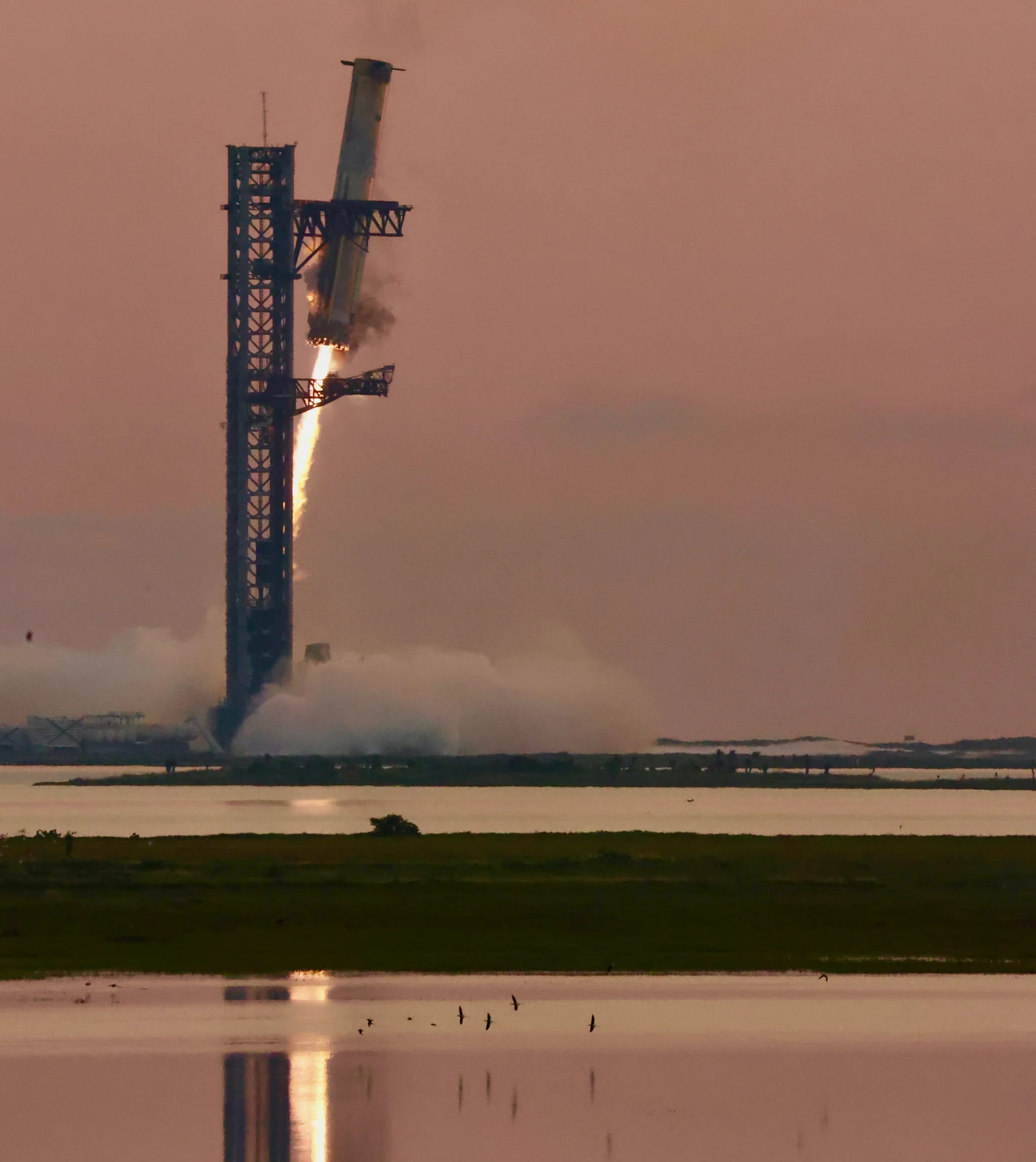
Flight 5 converted a proposed recovery method into hardware reality. Seven minutes after launch, the tower’s arms closed around the returning Super Heavy booster while Starship continued downrange to a controlled Indian Ocean splashdown.13
Mission profile
Key facts
Sequence
Event timeline
- T+00:0001
- T+02:4102
observed
Hot-stage separation
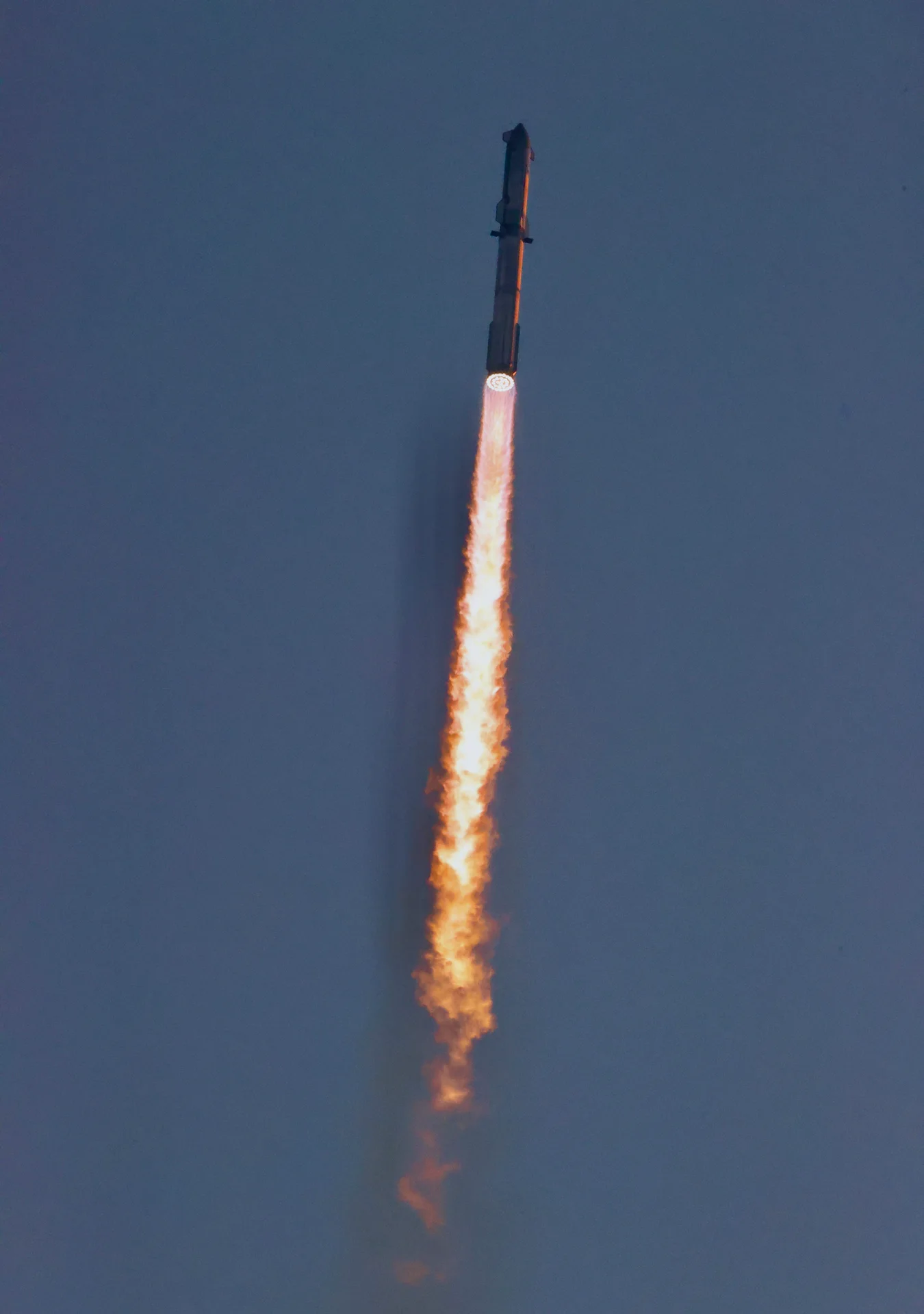
Starship ignites its engines before separation while Super Heavy begins its return sequence.1
- T+06:5603
observed
Booster catch
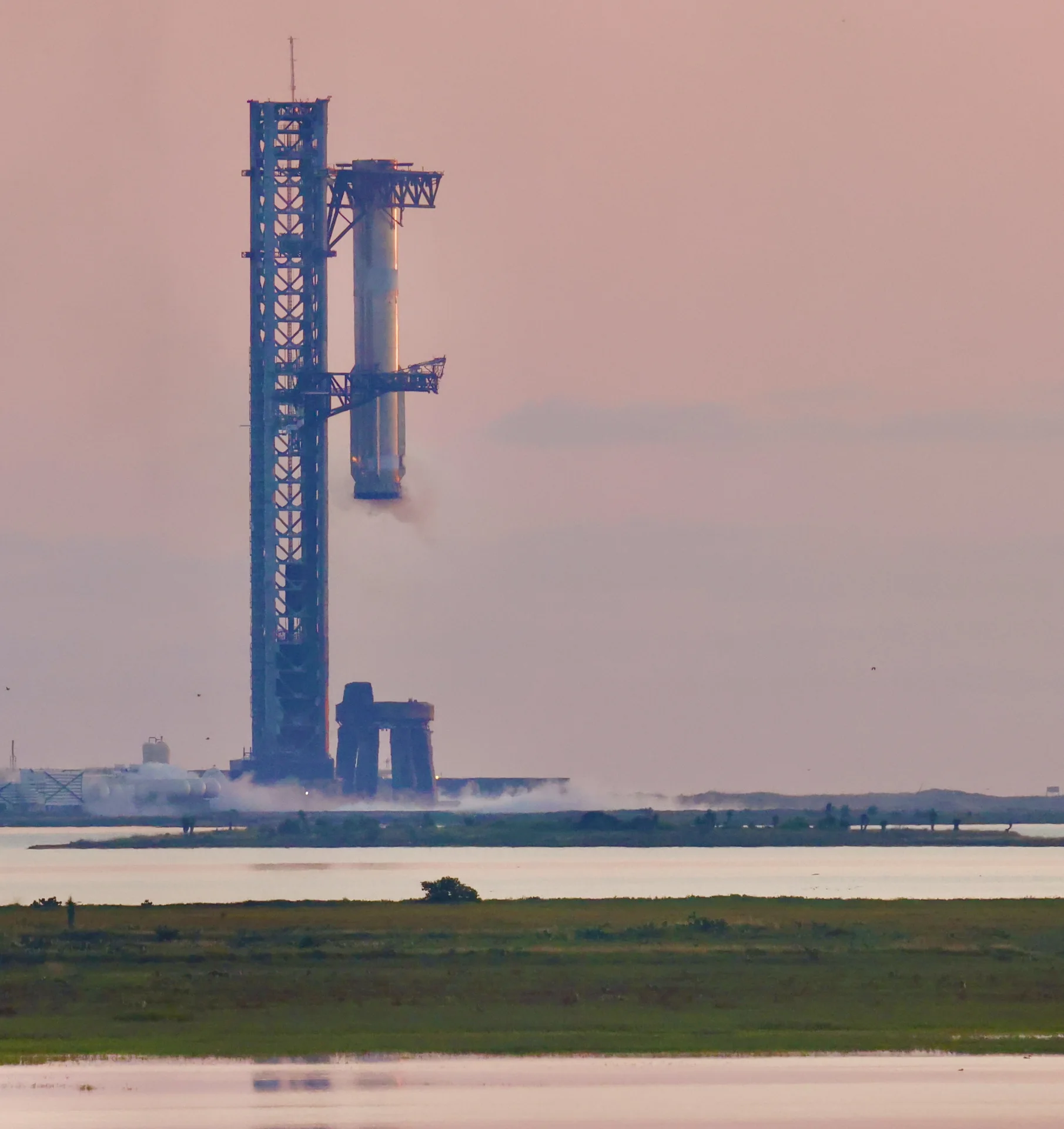
Super Heavy descends between the launch tower arms and is secured above the pad.1
- T+01:05:4204
reported
Ship splashdown
After atmospheric reentry, Starship completes its landing burn and splashes down in the Indian Ocean.1
Technical reading
Engineering highlights
Demonstrated outcome
Tower capture
The booster used grid fins and engine burns to return directly to the launch site, where mechanical arms carried its weight after engine cutoff.1
Company ambition
Launch-site recovery
Catching at the tower is intended to remove landing legs and position a recovered booster near the launch mount. Rapid reuse remains a company ambition, not an outcome proven by this flight.1
Demonstrated outcome
Controlled ship return
The upper stage survived reentry and executed a flip-and-burn maneuver over the Indian Ocean, providing another full-scale test of its heat shield and control system.1
04 / Assessment
Outcome
Catch and splashdown completed
Super Heavy returned to the launch site and was caught by the tower. Starship completed its planned ascent and coast, then made a controlled splashdown in the Indian Ocean.13
Legacy
The catch demonstrated a central element of SpaceX’s proposed reuse architecture: recovering the booster at the launch mount without landing legs. One test did not establish routine reuse, but it removed a major question about whether the maneuver was physically achievable.
Visual record
Gallery
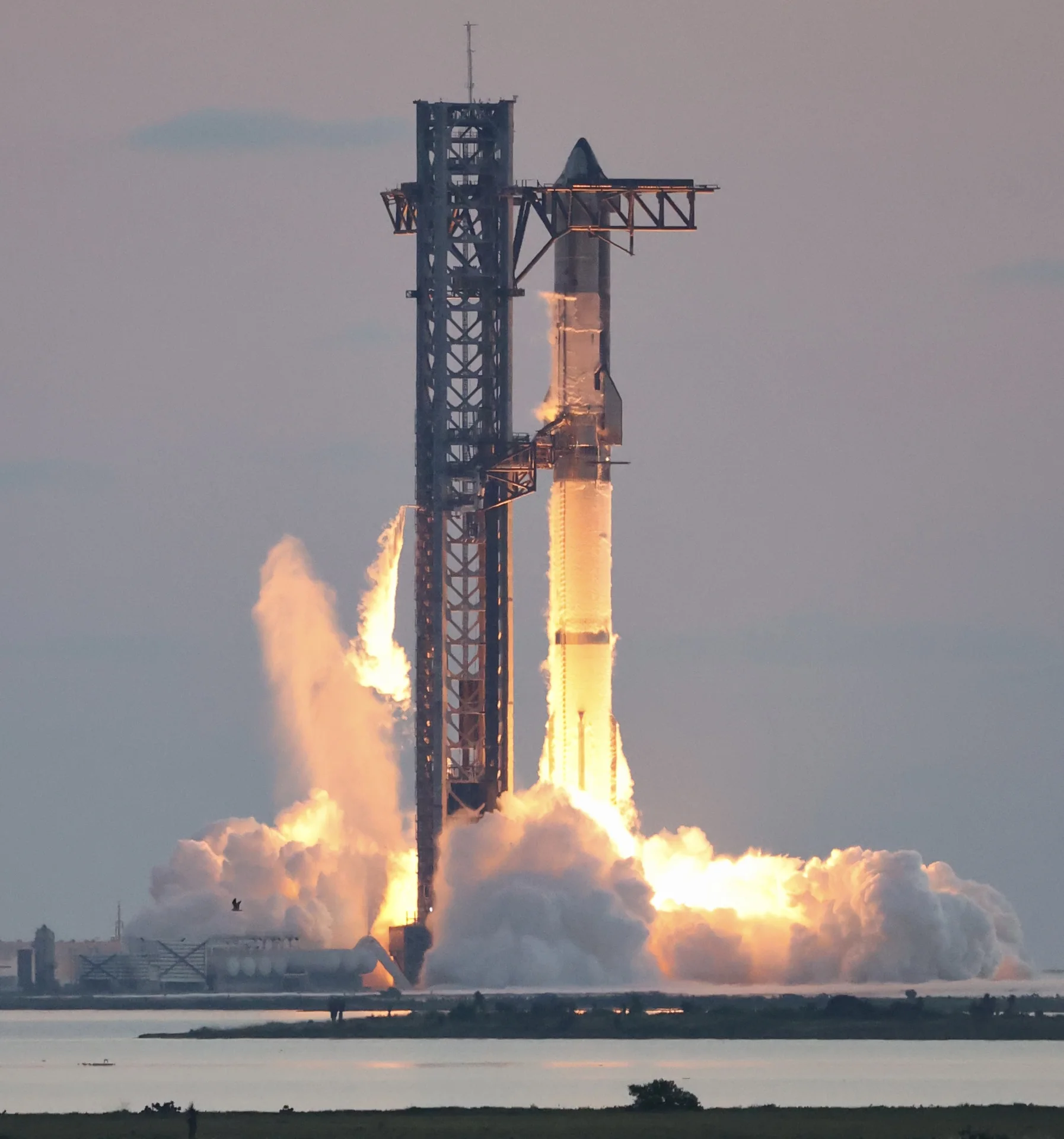
Documentary photographs by Steve Jurvetson, published under CC BY 2.0. Each frame links to its license and original Wikimedia Commons record.
 Documentary record
13 OCT 2024

 Documentary record
13 OCT 2024

 Documentary record
13 OCT 2024

Research record
Sources
- 01 Starship’s Fifth Flight Test ↗primary
SpaceX · Published 2024-10-13 · Accessed 2026-07-22
- 02 Starship | Fifth Flight Test ↗primary
SpaceX · Published 2024-11-06 · Accessed 2026-07-22
- 03 Jonathan's Space Report No. 838 ↗reference
Jonathan's Space Report · Published 2024-10-25 · Accessed 2026-07-22
- 04 Starship ↗primary
SpaceX · Published · Accessed 2026-07-22